
Stalled development project? Five times to call FRAME
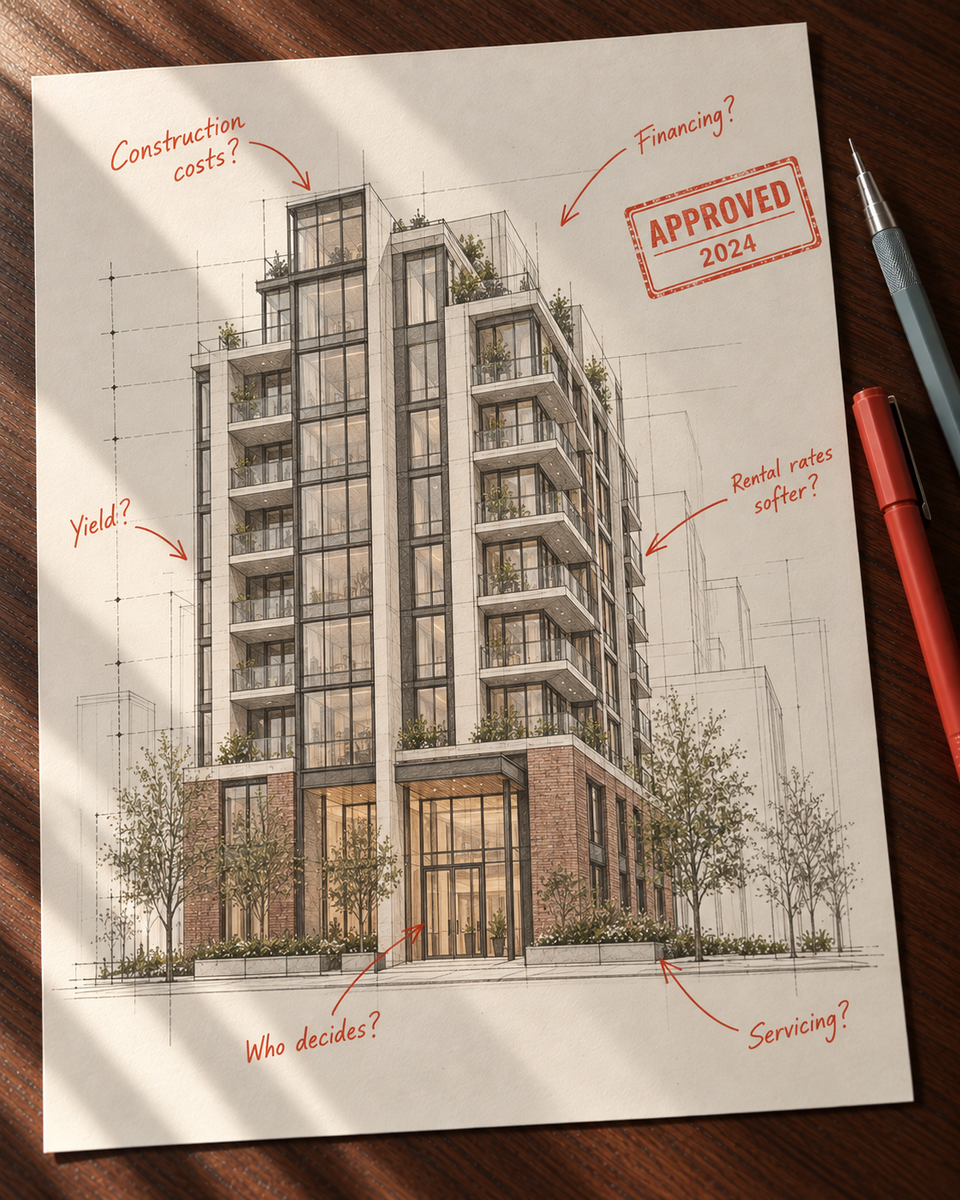
The situations that usually come before the first conversation.
Stalled development projects rarely announce that they’re in trouble. They show up as a feeling in the room: the meetings keep happening, the drawings keep improving, and nothing moves. Here are the situations I get called into most often, and what tends to change once someone senior is holding the whole picture.
1. The project was designed for a market that no longer exists
Most of these projects were sound when they started. The land bought, the market was demanding, approvals were hard won, and the pro forma worked. Then rates moved, costs changed, or revenue softened, and the assumptions underneath it stayed where they were.
Nobody did anything wrong. Individual numbers get updated along the way, a cost estimate here, a rent assumption there, but the project as a whole often isn’t rerun under the new conditions, because everyone is busy getting to the next milestone. The first step is that full retest: what still holds, what doesn’t, and what can change without reopening approvals. Often the answer is a different unit mix, tenure, or phasing, not a different project.
2. The issues have started having their own issues
Rental replacement affects phasing. Phasing affects servicing. Servicing affects cost. Cost affects viability. Each consultant has a separate mandate and a reasonable position, and each is right about their own piece.
What’s missing is someone looking across all of it. Pull one thread and the others move, so a fix in one area quietly creates a problem in another. A senior lead can map how the pieces depend on each other, decide which one to resolve first, and give the team a sequence they can all work to.
3. The project is moving. The decisions aren’t.
There’s a steady rhythm of meetings, updates, and revised drawings, but the decisions that would unlock the next phase keep waiting for someone else. Often nobody has been clear about who decides what, by when, and on what information. Ownership, investors, and the project team can each be waiting on the others.
The fix is usually simpler than it feels. Define who has authority over which decisions, put the question in a form someone can actually answer, and set a date. A project with clear decision rights moves at a different pace.
4. Approvals are advancing and nobody has retested the numbers since the rates changed
An approval feels like a finish line, and it’s natural to treat it as one. Zoning is in place, the application is moving, and the sense in the room is that the hard part is done. Meanwhile the financial assumptions behind the project may be a year or two old, and the question worth asking at this point is: if we got everything we applied for, would the project still work?
Approval tells you what you’re allowed to build. It doesn’t tell you what’s viable, financeable, or buildable at today’s costs. Checking now is cheap. Checking after the next large spend isn’t. The useful version of this work is a plain retest of the project against current numbers, so the team knows what it’s approving toward.
5. You need senior leadership in the room, not another full-time hire
Teams in this spot often conclude they need someone more senior and start a hiring process. It makes sense, but a search takes months, and the problem usually has a shorter shelf life than that. By the time the new person has started, the decision window may have closed.
What many of these projects need is someone who has done this before, in the room for the stretch that matters: the approvals, the repricing, the stalled decision. Then they hand it back clean. That’s the case for fractional leadership. It brings experience when the project needs it, and ends when the need does.
If one of these sounded familiar
Most projects I’m called into have two or three of these at once, and they’re usually connected. That’s normal. It means there’s likely one underlying issue to find, not five separate ones.
If a project of yours is stalled, shifting, or quietly getting more complicated, start a conversation.